Casaideas’ Position in Chile’s Home Decor Market
Founded in Santiago in 1993, Casaideas has grown into one of Chile’s best-known home decor and design retailers, built around a large catalog of affordable, design-forward products. With thousands of SKUs spanning furniture, textiles, kitchenware, and decorative accessories, the brand has expanded well beyond Chile into Peru, Bolivia, Colombia, and Mexico. That scale naturally puts it in competition with a mix of local specialty retailers and larger regional or global players.
Local Chilean Competitors
Within Chile specifically, Casaideas competes most directly with retailers like Homy and Easy, both of which offer overlapping categories of furniture, lighting, and decorative accessories aimed at similar middle-income shoppers. These local competitors often compete on price and proximity, with physical store networks spread across major Chilean cities, giving shoppers convenient access without relying on shipping times.
Falabella, one of Chile’s largest retail groups, is another significant competitor. Its home division carries a broader assortment that spans budget to premium pricing, giving it an advantage in reaching customers across a wider income range than a specialty retailer like Casaideas typically targets.
Global and Regional Players
Beyond Chile’s borders, Casaideas is frequently compared to international names such as IKEA, which has expanded its footprint across Latin America and competes on both price and design sensibility. Casaideas has explicitly positioned itself as a competitor to IKEA-style retailers in markets like Mexico, emphasizing locally relevant product design manufactured largely in Chile.
Industry analysts have also grouped Casaideas alongside e-commerce-driven home brands like Wayfair and Westwing, noting that its revenue scale and focus on home aesthetics place it in similar territory when it comes to capturing demand for affordable, stylish home products online.
What Differentiates Casaideas From These Competitors
- A large share of Casaideas’ product design and manufacturing happens close to its home market, which supports faster localization of trends compared to global mass retailers.
- The brand holds several sustainability certifications, including FSC and OEKO-TEX, which some competitors in the same price tier have not prioritized as heavily.
- Casaideas leans into frequent product turnover with thousands of SKUs, encouraging repeat visits rather than one-time large purchases.
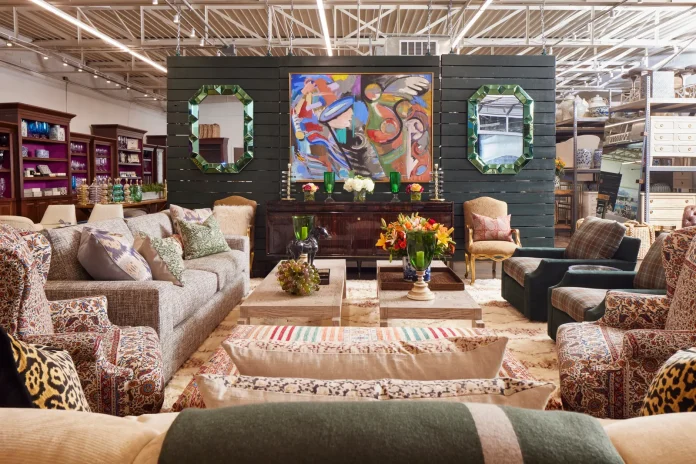
- Its store format sits between a full furniture showroom and a smaller lifestyle boutique, which differentiates it from big-box competitors like Falabella.
Why This Competitive Landscape Matters
Understanding who competes with Casaideas helps explain its strategic choices, including its continued store expansion into new Latin American markets and its investment in e-commerce. As homeware and furnishing spending across Latin America has grown steadily over the past decade, Casaideas has had to defend its position against both nimble local chains and well-funded global retailers entering the same markets.
For businesses or investors evaluating the home decor retail space in Chile and the broader region, tracking these competitive dynamics offers a useful lens on where consumer demand is shifting, particularly as more shoppers move between physical stores and online channels for home goods purchases.
How Casaideas Responds to Competitive Pressure
Facing competition on multiple fronts, Casaideas has leaned into a strategy of rapid product turnover and design differentiation rather than trying to out-scale larger rivals like Falabella or IKEA. By keeping a catalog of thousands of SKUs and refreshing product lines frequently, the company gives shoppers a reason to return regularly rather than treating it as a once-a-year furniture destination.
The company has also continued investing in e-commerce infrastructure, recognizing that competitors positioned closer to pure online retail, such as Wayfair, represent a growing share of home decor spending. Expanding delivery capabilities and online catalog depth has become as important to its competitive strategy as its physical store network.
Lessons for Other Regional Retailers
Casaideas’ approach offers a useful case study for other mid-sized retailers competing against both local rivals and global entrants. Rather than competing purely on price, which favors larger-scale operators, focusing on design differentiation, regional manufacturing speed, and sustainability credentials has allowed it to defend a distinct position in a crowded market.
This strategy also reduces exposure to the kind of price wars that tend to erode margins fastest for mid-sized players. By competing on design and turnover speed rather than matching every discount a larger department store can offer, a specialty retailer can protect profitability even while operating at a smaller absolute scale than its biggest rivals.
Final Thoughts
Casaideas operates in a genuinely competitive segment of Latin America’s retail economy, facing pressure from local Chilean chains, larger department-store groups, and international furniture giants alike. Its continued growth suggests that its combination of design-led products, regional manufacturing, and sustainability positioning has helped it carve out a durable niche despite that crowded field.