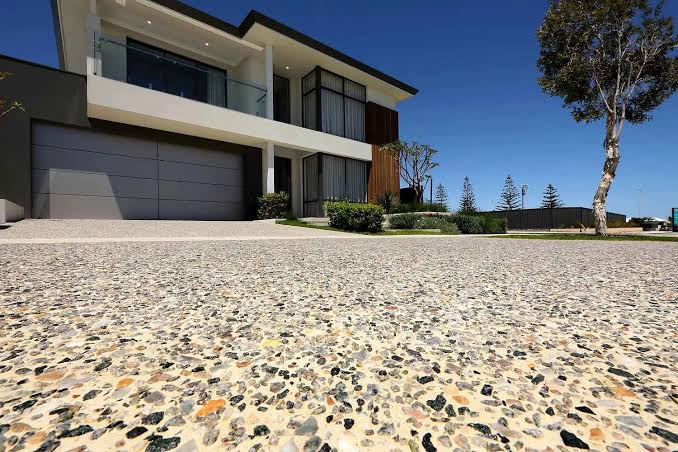
Constructing a residence on a steep block offers unique challenges. Driveways require proper grading and retaining walls may be necessary to manage soil and make it more usable.
The usual question comes into play, which should be built first. For many projects, it really comes down to the site design and engineering plans, as well as how much earthwork is involved. When the construction of concrete driveways in Cranbourne is being planned by homeowners, it involves getting the order in place to salvage reworks.
Why Construction Order Matters?
A steep block usually requires soil excavation, filling, drainage, and ground level alteration. The subsequent step can be influenced by any preceding stage.
If the driveway is built before excavation then it may make it difficult for the machinery to access. Conversely, the failure to take into account the finished driveway level while building a retaining wall can lead to drainage, access, and finished levels problems.
Thus, the whole site should be designed as a single project rather than considering the driveway and retaining wall separate projects.
When is It Building the Retaining Wall First Time?
A retaining wall is only required to achieve the finished ground level for the driveway and in which case, it may need to be built first before the surface of the driveway.
The wall will define the finished level and assist in retaining earth where the driveway will be placed.
When designing retaining walls in Cranbourne, drainage and soil pressure considerations may also require understanding of neighbouring structures and the loads from cars using the driveway.
But What About Site Access?
There is an important exception. Site access is needed for all construction vehicles and machines.
Constructing a retaining wall too soon will slow excavating equipment and material deliveries. In some cases, access solutions may also need to be temporary.
And this is why the construction method should be a blue print all agreed before any work commences.
Preparing the Driveway Area
The driveway base must be prepared accordingly prior to pouring concrete. Part of this could be excavation, grading/compaction, and drainage work.
Those steps are all the more critical on a steep block. Bad preparation could lead to cracking, subsequent settlement, and drainage issues.
The final driveway level needs to integrate with retaining walls, landscaping, and stormwater drainage when paving concrete driveways in Cranbourne.
A Typical Construction Sequence
A project will generally follow this order, though every site is different.
- Site survey and engineering assessment
- Establishment of finished levels
- Excavation and earthworks
- Drainage installation
- Retaining wall construction where required
- Driveway base preparation
- Concrete driveway installation
- Final landscaping and finishing
Depending on site access and engineering demands, the real sequence may vary.
Should You Build Them Together?
In some cases, it just makes sense to coordinate both as a single project (or process). The retaining wall and driveway must work structurally and visually.
Professional builders of retaining walls in Cranbourne are skilled at matching driveway design with wall heights, land drainage, and ground conditions.
Doing this can minimise the likelihood of a contractor running works that some other eventually has to dismantle or alter.
Final Thoughts
It is also the case that a retaining wall on steeper blocks can be constructed first, ahead of driveway architecture. The order will depend on things such as access, earthworks, drainage, and engineering requirements (and final site levels).
However, when a retaining wall is required in order to set the driveway elevation it will commonly be part of the earlier phases of construction.
From day one planning concrete driveways with retaining walls in Cranbourne can result in a more stable, better-drained finished property-more attractive, and safer for the people using it.