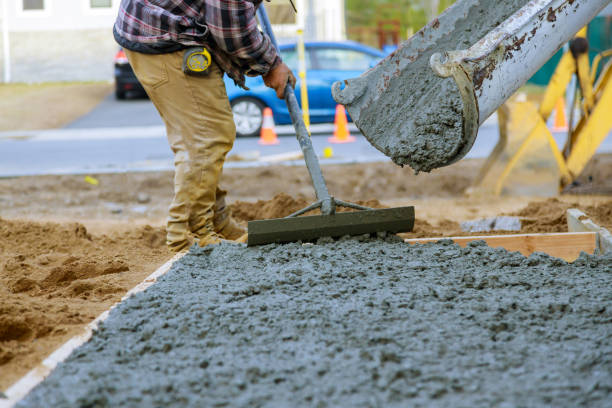
Although concrete is a hard material in nature, that does not mean it will never crack. During the drying process, a slab shrinks as its concrete dries. Fluctuations of heat can also cause shrinkage and expansion. The surface may also develop cracks if this movement causes too much stress.
This process is managed with control joints. They engineer intentional flaw points where fractures have a higher chance of occurring. It won’t stop every crack but will keep cracking neat and less visible.
What are Concrete Control Joints?
A control joint is essentially a cut or groove in the surface of a slab poured with concrete. This leads to a weakening strip that directs cracking beneath the surface.
When concrete shrinks, it causes stress in the slab. The joint provides a favoured outlet for that stress. It reduces the likelihood of cracks randomly running through the middle of your driveway, pathway, or patio.
When you are concreting in Endeavour Hills, control joints must be pre-planned. The location, depth, and distance of spacing will vary depending on the slab thickness, concrete mix, and site conditions, as well as shape.
Where Should Control Joints Go?
Joint placement matters. Long and narrow slabs require joints at predetermined locations. A grid design may be required to segment the surface into smaller parts if it is too large.
A good joint layout usually is geared to:
- Lay out the slab at a size that is manageable.
- Stay away from long, skinny panels.
- Track slab shape or width changes.
- Conform to corners and other places where tension might accumulate.
Things like re-entrant corners are a place in which cracking is likely to occur, like with the corner of an L-shaped slab. Attentive placement of the joints might mitigate this risk.
That said, joint spacing should not be merely an estimate. An acceptable layout of the slab and its utilisation is designed by a skilled concrete professional.
When to Cut the Control Joints
Placement is only half the battle, timing is as important. Joints cut too early make concrete chips along the edge. If they are cut too late, random cracks could have already occurred.
Certain joints are constructed with fresh concrete. Others are cut with saws after the surface has dried sufficiently to prevent disruption.
Exact timing is based on the concrete mix, weather, slab state, and cutting technique. Surface drying would be speeded up or delayed, so hot or airy weather would entail closer attention to work.
Do Control Joints Prevent Every Crack?
No. They assist in controlling cracking but eliminate the cause of all concrete movement.
Other problems they can still lead to include poor ground preparation, weak subgrade support (the material under the footer), excess water in the mix, and poor curing. The slab will need a good base, proper drainage, as well as the correct concrete height and also reinforcement in all locales.
Which is why good planning for outdoor projects also considers how water flows over the site. It is the area requiring cooperation between foundation-setting and earthworks.
Consider the Entire Outdoors Space
When thinking about landscaping, you want to make sure a new driveway or patio fits the larger shape of your home. Levels, drainage, and the splitting of concrete can be influenced by paths, garden beds, and retaining works.
Laying out these elements helps create a finished space that is well thought out and practical, while professional landscaping in Endeavour Hills can assist should your requirements be beyond the capabilities of lawn trimming or fence painting. Vic Excavator is one of the companies that provide excavation and outdoor site preparation services, so in your research for an excavation service provider, you can refer to this.
Plan Before the Concrete Arrives
Control joints perform best if they are incorporated into the original slab design rather than an installation after the fact. Before work starts, enquire about how the base will be prepped, where joints are going to be placed, and how the concrete will be cured.
No matter if you are scheduling concreting in Endeavour Hills or organising landscaping in Endeavour Hills, careful planning can undoubtedly lower the number of avoidable obstacles. It is true that concrete will crack, but properly oriented joints help to direct the path of those cracks.