The Fixture Used Every Day That Most People Upgrade Last
The shower head is the bathroom fixture with the most direct daily contact and one of the last that most homeowners upgrade. The original builder-grade shower head — typically a basic fixed mount at a single spray setting — may have been in the bathroom for 15 years when the homeowner’s first attention goes to faucets, vanities, and tiles rather than to the fixture that touches every shower.
A shower head upgrade is among the most impactful plumbing improvements available per dollar: a quality shower head installation costs $50–$300 in hardware and 15 minutes of installation time, and it changes the shower experience every day for years. Understanding what the different types offer helps allocate the upgrade budget where the daily experience improvement is highest.
Fixed vs. Handheld: The Configuration Choice
A fixed shower head mounts at a single position on the wall or ceiling and doesn’t move during use — the showerer moves within its spray range. It provides a consistent overhead spray experience appropriate for most typical shower routines. A handheld shower head attaches to a flexible hose, allowing the spray to be directed at specific body areas, used at waist height for children and pets, and positioned for rinsing tasks that a fixed head reaches poorly.
The combination — a fixed head plus a handheld on the same shower arm or wall-mounted separately — provides both overhead coverage and the flexibility of a handheld at a modestly higher cost. Most combination systems use a diverter valve to switch water flow between the two heads; dual-output systems that supply both simultaneously require a higher-flow supply line.
Rain Shower Heads: What Makes Them Different
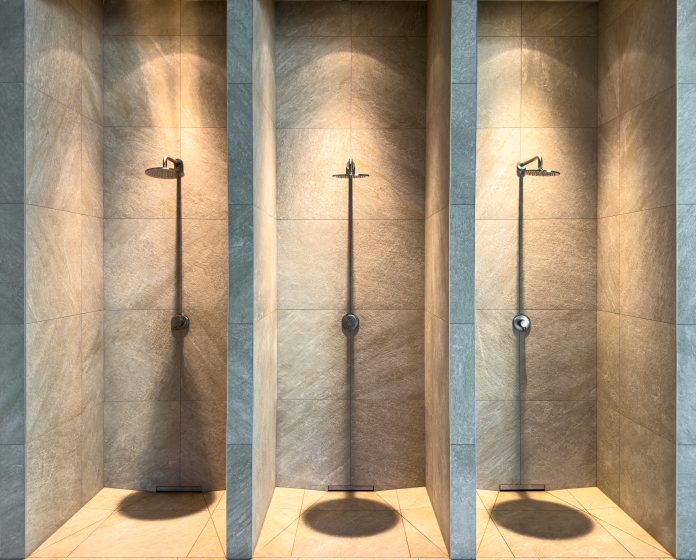
A rain shower head — a large-diameter (8 to 12 inches) fixture that produces a wide, low-pressure waterfall-style spray — provides the closest residential approximation to showering in warm rain. The wide spray covers the full body without directional movement, and the lower velocity is gentler on skin than the concentrated spray of standard shower heads.
Rain heads mounted on ceiling-mounted shower arms (which require a shower arm extension that angles the head to vertical) provide the most authentic rainfall experience. Wall-mounted rain heads angled toward the center of the shower are a simpler installation that approximates the effect. The trade-off of rain heads: they use more water than standard heads at equivalent pressure because the spray footprint is larger, and the lower velocity makes hair rinsing slower than a standard head.
Flow Rate and Water Efficiency
Standard shower heads are federally regulated at a maximum of 2.5 gallons per minute (GPM). WaterSense-certified shower heads flow at 2.0 GPM or less, reducing water use by 20% or more per shower. The perceived difference between 2.5 and 2.0 GPM depends on the spray pattern — a well-designed 2.0 GPM head with a focused, pressurized spray can feel more powerful than a poor-quality 2.5 GPM head that delivers the same volume diffusely.
California and a few other states have more restrictive standards (1.8 GPM maximum for new installations). Before purchasing a shower head with a flow rate label, verify whether your jurisdiction has stricter local standards. Installing a non-compliant shower head in a regulated jurisdiction creates the same disclosure complication at sale as other non-compliant fixtures.
Pressure-Compensating and Filter Heads
Pressure-compensating shower heads maintain a consistent spray pattern across a range of supply pressures — relevant in households where water pressure fluctuates significantly or in homes with multiple bathrooms where simultaneous use reduces pressure. Standard shower heads produce a noticeably weaker spray as pressure drops; pressure-compensating designs maintain the intended spray pattern through the operating pressure range.
Filtered shower heads (which incorporate a filter cartridge that reduces chlorine, chloramine, and sediment from the shower water) are the product category that has grown most significantly in recent years as awareness of chlorine’s effects on skin and hair has increased. A vitamin C filter (which neutralizes chlorine and chloramine through chemical reduction) provides effective dechlorination at a filter cartridge cost of $15–$30 per replacement, typically lasting 3–6 months of daily use.